
The Jeep Gladiator is the only "real" pickup Jeep has ever built, and its 5-foot bed is the shortest in its class. That's not a knock — it's the whole point. You buy a Gladiator because you want Wrangler capability with a bed you can actually use. But a 60.3-inch bed means anchor layout matters more here than on a long-bed truck, because you've got less room to spread a load and the wheel wells eat into your floor space from both sides.
This guide walks through how we layout six tie-down anchors in a Gladiator short bed, where it overlaps with our 3rd Gen Tacoma short-bed layout, and the four places where Gladiator is genuinely different from Tacoma — bed material, wheel-well spacing, tailgate, and rail channel shape.
Gladiator bed dimensions vs Tacoma
Before you buy a single anchor, you need the numbers. The Gladiator bed is 60.3 inches long — almost exactly the same as the Tacoma short bed (60.5 inches). The difference that actually matters is between the wheel wells.
| Dimension | Gladiator (5-ft bed) | Tacoma (short bed) | Why it matters |
|---|---|---|---|
| Bed length (wall to tailgate) | 60.3" | 60.5" | Effectively identical |
| Width between wheel wells | 44.6" | 41.5" | Gladiator is 3" wider — a pallet that fits a Tacoma may not fit a Gladiator |
| Width at rail top | 56.8" | 56.7" | Identical |
| Bed floor material | Steel | Steel (with composite spray-in) | Both drillable; both rust-prone |
| Bed rail | Formed steel channel | Formed steel channel | Same anchor mounting profile |
| Factory tie-down loops | 4 (one per corner) | 4 cleats | Both under-spec'd for real loads |
The one number that changes your layout math is the 44.6-inch wheel-well spacing. A standard 48-inch pallet does NOT fit between Gladiator wheel wells (it's 3.4 inches too wide). On a Tacoma, same problem — 48-inch pallet is 6.5 inches too wide. So neither truck fits a pallet between the wells; you strap over the top. The difference is that on the Gladiator you've got 3 more inches of squeeze room if you're running a 44-inch-wide load (a narrow ATV, a stacked cooler setup, a motorcycle front wheel).
The factory anchor points (and why they're not enough)
The Gladiator ships with four tie-down loops, one in each corner of the bed. Jeep rates them for around 150-300 lb each depending on the model year and the loop design — check your owner's manual for the exact number, because it changed between 2020 and 2023. Either way, that's a sleeping bag, not a dirt bike.
A 600-lb dirt bike strapped to four 150-lb loops is a 4:1 overload on paper, and in practice the loops are stamped steel that flexes under shock load. We've seen them bend down toward the bed floor after one season of highway miles. The fix is the same as on every other truck: bolt-on bed rail cleats that use the factory stake pockets, which are rated for the full 4,500-lb WLL of the D-ring you mount in them.
The RENO upgrade path for Gladiator
Here's the good news: the Gladiator bed rail is dimensionally the same channel as the Tacoma and Tundra rail. That means our Tacoma/Tundra/Gladiator bed rail cleats drop straight in. RENO Bed Rail Cleats for Gladiator use the factory stake pockets, no drilling, 4,500-lb WLL per cleat.
For the wider wheel-well loads, we run the bed rail cleat variant that spans the rail top rather than just the pocket — it gives you a mounting point closer to the centerline, which matters when your load is wider than the wells.
If you're running a steel bed in a salt state (we see this constantly in the Northeast and the Midwest), go stainless: RENO 304 stainless bed rail cleats. Steel bed plus aluminum cleat is a galvanic cell waiting to happen — stainless on steel is the safer long-term pairing even though it costs more up front.
The six-anchor layout for a Gladiator short bed
Same philosophy as the Tacoma layout: two anchors per side, front and rear of the wheel wells, plus two at the tailgate. Here's how it maps to the Gladiator's 44.6-inch wheel-well spacing.
Zone A — Front bed wall (behind the cab)
Two bed rail cleats mounted in the stake pockets just ahead of the wheel wells. These take the forward load when you brake. On the Gladiator, the front bed wall is 7 inches from the cab — same as Tacoma — so the strap angle to a dirt bike front wheel is essentially identical.
Zone B — Mid-bed, over the wheel wells
Two cleats on the rail top, as close to the 44.6-inch centerline as the rail allows. This is the zone that's different from Tacoma: because the Gladiator wells are 3 inches wider, a load that sat centered on a Tacoma may need to shift forward or back on a Gladiator to clear the wells. We run the rail-top variant here specifically so the anchor can move with the load.
Zone C — Tailgate
Two cleats at the tailgate end of the rails. The Gladiator tailgate is steel and heavy (it's hydraulically assisted, not spring), so it takes rear load well — but don't strap to the tailgate itself, strap to the rail cleats at the tailgate end. The tailgate is a hinge, not an anchor.
Where Gladiator is genuinely different from Tacoma
Most of this guide overlaps with the Tacoma layout because the beds are nearly identical. But four things are specific to the Gladiator, and they change your anchor decisions.
1. The bed is steel (rust is the real enemy)
The Gladiator bed is steel, not the aluminum Toyota uses on some trims. Steel drills easier than aluminum (no drill-bit wander, no work-hardening), but it rusts. If you're in a salt state, every bolt-through anchor is a future rust spot. The fix: use stainless cleats (not aluminum) and a dab of dielectric grease on the threads. We've pulled aluminum cleats off steel beds after two winters and found the threads seized solid — stainless doesn't do that.
2. Wheel wells are 3 inches wider
Covered above, but worth repeating: 44.6 vs 41.5 inches. A load that fits between Tacoma wells may not fit between Gladiator wells. Plan your layout for the wider spacing, and use rail-top cleats (not just pocket cleats) to get anchors closer to centerline.
3. The tailgate is a different animal
The Gladiator tailgate is hydraulically assisted and rated to stand up as a work surface. It's steel and heavy. The mounting points where the rail meets the tailgate are reinforced on the Gladiator, so your tailgate-end cleats have more material to grab than on a Tacoma. Use it — but still strap to the cleat, not the tailgate panel.
4. Rail channel shape
The Gladiator rail channel is a slightly different profile than the Tacoma rail — the inside lip is a hair deeper. Our cleats accommodate both, but if you're mixing brands, measure the rail lip before you buy. A cleat that clips the Tacoma lip may not seat on the Gladiator lip.
Four hard-won lessons (Gladiator-specific)
Lesson 1: Stainless on steel, not aluminum on steel
We learned this the hard way on a shop Gladiator that lived in Michigan. Aluminum cleats on a steel bed seized in two winters. Swapped to 304 stainless and the threads came out clean three years later. If your bed is steel, your cleats should be stainless.
Lesson 2: The 44.6-inch number is your layout constraint
Don't design a load around the 56.8-inch rail width. Design it around the 44.6-inch well spacing. Everything wider than that straps over the top, and your anchors need to be positioned for that, not for the rail edges.
Lesson 3: The factory loops are decoys
Jeep puts four loops in the bed and most people assume they're anchors. They're not rated for recovery or heavy cargo. Use them for a tarp or a cooler, not a motorcycle. The moment you strap a real load to them, they bend.
Lesson 4: Grease the threads, every winter
Steel bed + any metal cleat = thread corrosion. A dab of dielectric grease on the stake-pocket threads at every oil change keeps the cleats removable. We've seen seized cleats require a drill-out because nobody greased them — don't be that person.
Gladiator shopping list (RENO line)
- Bed rail cleats, standard (aluminum, dry climates): RENO Bed Rail Cleats (2-pack, 4,500 lb WLL)
- Bed rail cleats, standard variant (wider loads): RENO Bed Rail Cleats variant (rail-top mount)
- Bed rail cleats, stainless (steel bed / salt states): RENO 304 Stainless Bed Rail Cleats (2-pack)
- Small-size bed rail cleats (tight spaces): RENO Small-Size Bed Rail Cleats (2-pack)
- D-ring shackle (recovery / multi-angle): RENO 3/4" D-Ring Shackle (2-pack, 4,750 lb WLL)
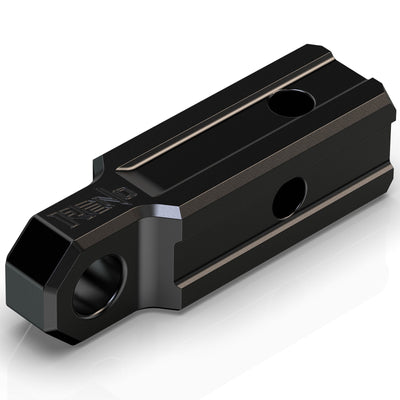
- Receiver shackle (rear recovery): RENO 2" Receiver Shackle Hitch (35,000 lb GTW)
Frequently asked questions
Q: Will my Tacoma bed rail cleats fit a Gladiator?
A: If they're RENO cleats, yes — our Tacoma/Tundra/Gladiator line shares the same rail channel profile. Measure the rail lip depth first (Gladiator's is slightly deeper), but our cleats accommodate both. Brand-X cleats may not seat on the deeper Gladiator lip.
Q: Can I drill into the Gladiator bed floor?
A: Yes, it's steel, so it drills cleanly. But every hole is a rust spot in a salt state. Bolt-on stake-pocket cleats are reversible and leave the bed intact — we recommend those over drilling unless you're building a dedicated work truck.
Q: What's the max load for a Gladiator bed with RENO cleats?
A: With six 4,500-lb WLL cleats and the 5:1 safety factor for dynamic loads, you can safely strap roughly 5,400 lb of dynamic load (six anchors × 4,500 ÷ 5). That's more than the Gladiator's 1,600-lb bed payload rating — so the bed payload, not the anchors, is your limit. The anchors are never the weak link.
Q: Aluminum or stainless for a Gladiator?
A: Stainless if your bed is steel (which it is) and you're in a salt state. Aluminum if you're in a dry climate and want to save weight. Never run aluminum cleats on a steel bed in the Rust Belt — the galvanic corrosion will seize the threads.
Q: Are Gladiator bed anchors the same as Wrangler anchors?
A: No. The Wrangler has no bed — it's a tub. The Gladiator shares the Wrangler's front end and frame philosophy, but the bed is Gladiator-specific. Bed rail cleats are Gladiator-only; Wrangler owners use different mounts (mirrors, roll bars, bumpers).
Q: How do I stop the factory loops from rusting?
A: They're stamped steel and will rust regardless. The real fix is to stop using them for loads and move your anchor points to bolt-on cleats that you can maintain. Touch-up paint on the loops slows it, but they're not structural anchors anyway.
Q: Can I use the same six-anchor layout as my friend's Tacoma?
A: Almost. The front and tailgate zones are identical. The mid-bed zone shifts because the Gladiator wells are 3 inches wider — use rail-top cleats there instead of pocket cleats so the anchor can move with the load. Everything else transfers.
The TL;DR
The Gladiator short bed is a Tacoma short bed with a steel bed, 3 wider inches between the wheel wells, and a heavier tailgate. Your six-anchor layout transfers almost directly — front wall, mid-bed rail-top, tailgate-end — but run stainless cleats on the steel bed, position your mid-bed anchors for the 44.6-inch well spacing, and grease the threads every winter. The factory loops are decoys; the bolt-on cleats are your real anchors. See the Tacoma version of this layout here, and the full D-ring and WLL guide here.
About RENO: renoallroads.com is a small offroad shop in the Bay Area. We've been designing, testing, and shipping tie-down and recovery hardware for trucks and SUVs for 8 years — Gladiator, Tacoma, Tundra, F150, and everything in between. Every product on the site is something we've run on our own shop trucks first. Questions about your specific Gladiator setup? team@renoallroads.com.